
Reporting Tool
Report a Hate Incident
Reporting Tool
Why We Collect Data
What We Do With the Data
Hate Crime Statistics
FAQs
Difference Between a Hate Crime & Incident?
Difference Between a Hate Crime & Incident?
Hate incidents often go undocumented. The #STOPHATEAB website provides a place where these incidents can be captured. By making this information accessible, communities can be greater aware and informed about the impact of hate on communities in Alberta.
Reporting Tool
Reporting Tool
This form is designed to give you a platform to report a hate incident to the StopHateAB. PLEASE REPORT ALL HATE CRIMES TO THE POLICE. A hate incident is a non-criminal action committed against a person or property, the motive for which is based in whole or in part upon the victim’s race, national or ethnic origin, language, colour, religion, sex, age, mental or physical disability, sexual orientation, gender identity or expression, or any other similar factor. Because they are non-criminal in nature, police are limited in their ability to be involved.
Information from this form will help develop a clearer understanding of hate incidents in Alberta, and will help the StopHateAB with our outreach and educational programs. No identifying information will be asked for and your report will be anonymous. If you have any questions, please email us at info@stophateab.ca.
Edmonton
Complaint Line
780-423-4567, or call / text #377 from an Edmonton mobile
Crimes Stoppers App
Calgary
RCMP
Why Do We Collect Hate Crime Data?
Why We Collect Data?

Identify Trends
Detect patterns in hate incidents to understand where and how they occur.
Support Communities
Provide resources, guidance, and interventions tailored to those impacted.
Inform Policy & Prevention
Help governments, law enforcement, and organizations develop effective strategies.
Measure Impact
Track progress of programs and initiatives to ensure they make communities safer and more inclusive.
What Do We Do With the Data We Collect?
Data Security


StopHateAB collects information about hate incidents and crimes to better understand patterns of hate activity across Alberta. The data we gather is used to identify trends, support affected communities, and inform education, prevention, and policy efforts.
All reports are reviewed with care and confidentiality. Personal information is never shared publicly or used to identify individuals without consent. Instead, the data is aggregated and anonymized to:
Help communities, service providers, and law enforcement recognize emerging issues
Inform government and advocacy partners on areas needing stronger responses or support
Guide the development of educational resources and community programs
Track progress and measure the impact of hate prevention initiatives
Our goal is to turn information into action — ensuring that every report contributes to safer, more inclusive communities across Alberta.
What We’ve Learned
What We’ve Learned
The following visualizations represent previously collected data; updated figures will be published once the new dataset is fully processed.
Survey responses about the top 5 location of hate crimes and incidents between 2019 and 2022 in Large Urban Centers vs. Small Population Centers.
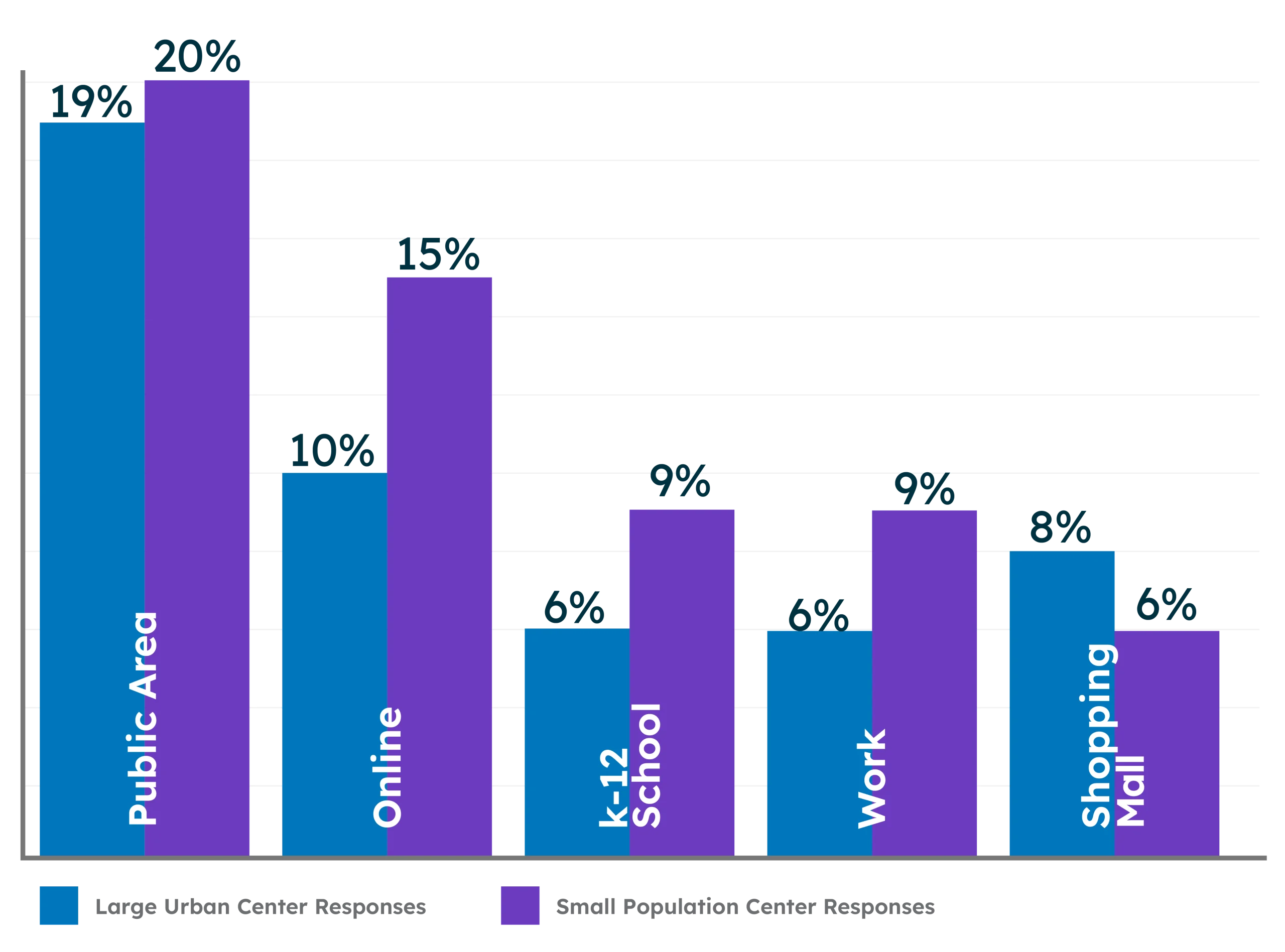

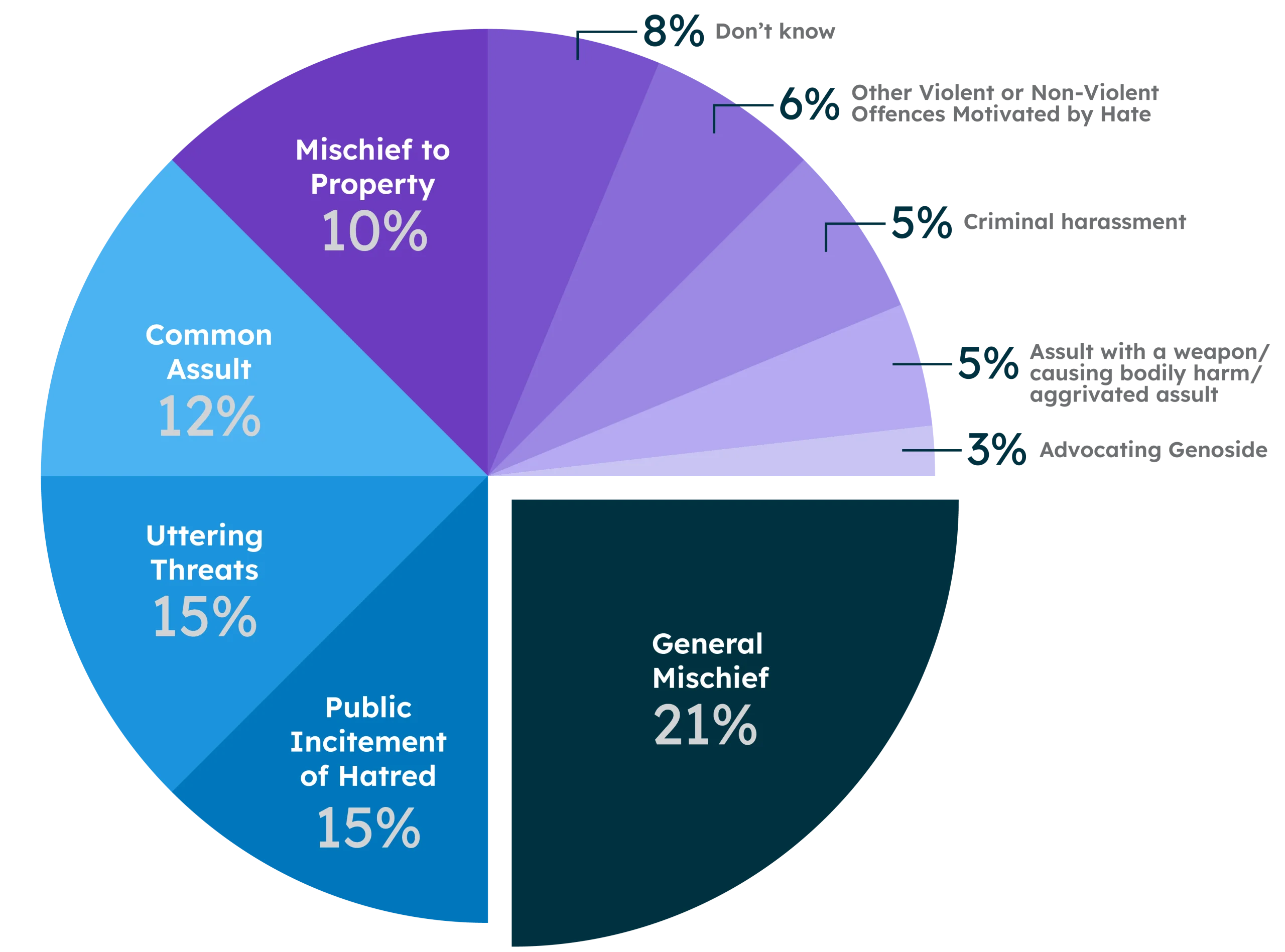
%
General Mischief
Survey responses about the typology of hate crimes between 2019 and 2022
%
Uttering Threats
%
Common Assault
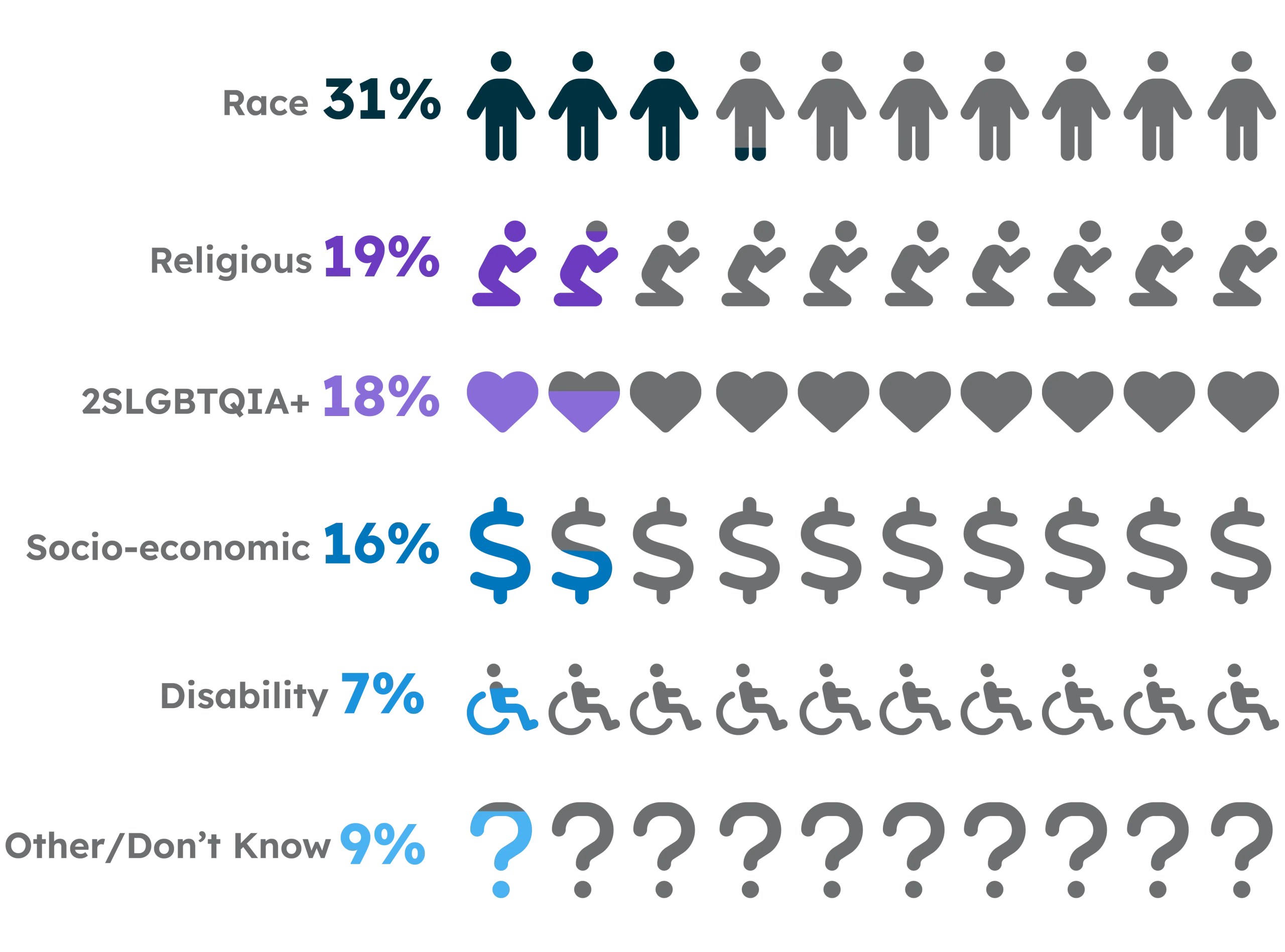
Race
Is the Highest Reported Motivator Behind Hate Crimes/Incidents
Between 2019 & 2022
Frequently Asked Questions
Frequently Asked Questions
Hate Crime vs. Hate Incident, What’s the difference?
Hate incidents often go undocumented. The #STOPHATEAB website provides a place where these incidents can be captured. By making this information accessible, communities can be greater aware and informed about the impact of hate on communities in Alberta.
Who can report a hate crime or incident?
Anyone who experiences, witnesses, or has reliable knowledge of a hate crime or incident can make a report. You do not need to be a victim to report.
How do I report a hate crime?
You can report a hate crime directly to local law enforcement or submit a report through StopHateAB’s confidential reporting system. Both options ensure your information is documented and can help guide appropriate action.
Do I have to give my name when reporting?
No. Reports can be submitted anonymously. However, providing your contact information allows authorities or StopHateAB to follow up if additional information is needed.
What happens after I submit a report?
Your report is reviewed carefully. Law enforcement or StopHateAB may follow up for more details, depending on the situation. The information is used to support victims, track trends, and guide prevention and education efforts.
Is my information kept private?
Yes. Personal information is protected and will not be shared publicly. Data is aggregated and anonymized when used for research, reporting, or public awareness.
What if I need immediate help or support?
If you are in danger or require urgent assistance, contact local authorities immediately by calling 911. StopHateAB can also connect you with support services, counseling, or community resources.